Infinite Inspiration
From Miyazaki to UNESCO, from San Bonaventura to contemporary art
Miyazaki and Laputa
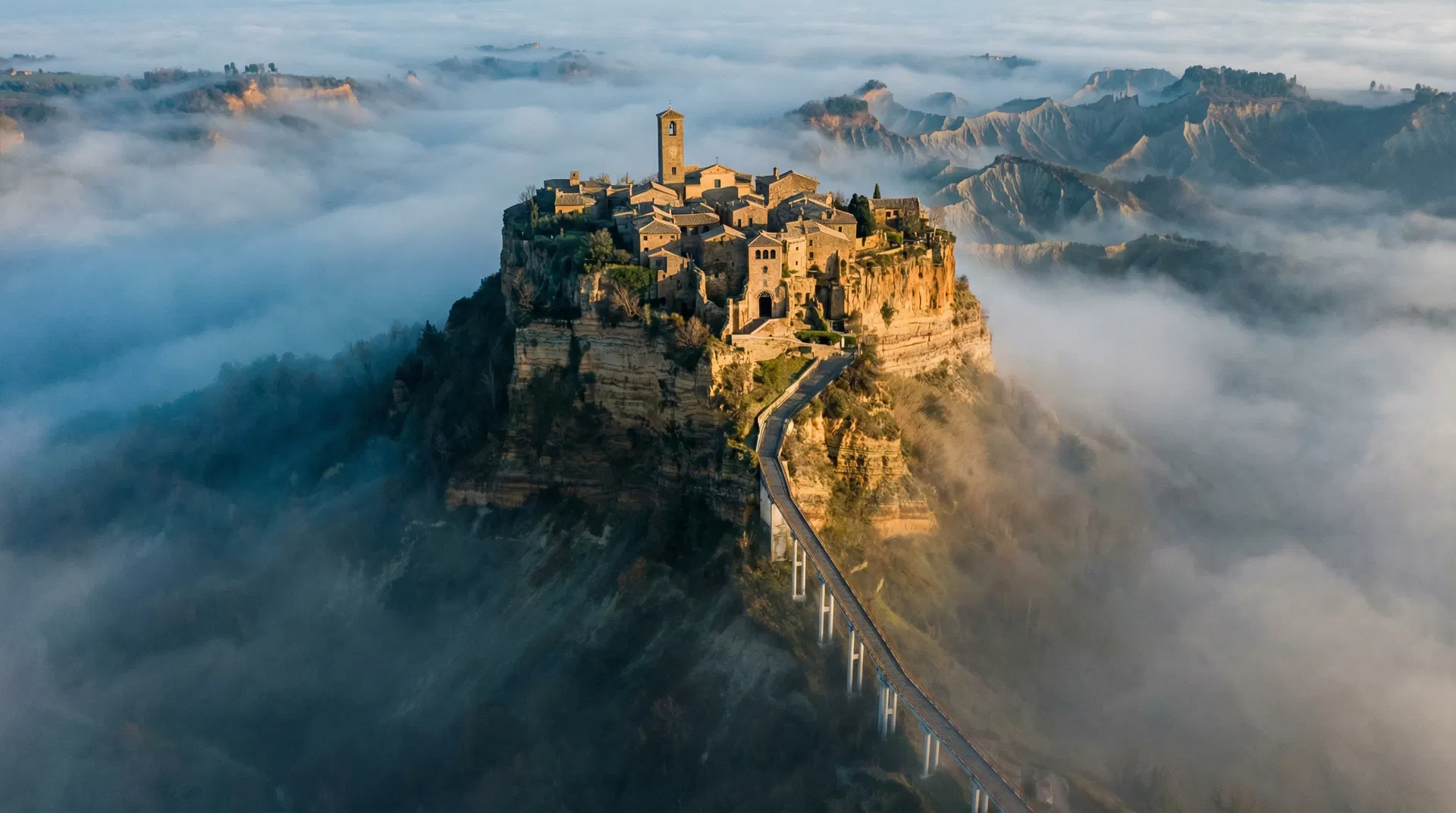
In 1990, master Hayao Miyazaki visited Italy and was deeply struck by Civita di Bagnoregio. The tufa island suspended in the void, wrapped in morning mists, became one of the sources of inspiration for his masterpiece "Laputa — Castle in the Sky" (天空の城ラピュタ, Tenkū no Shiro Rapyuta), released in 1986.
The parallel is striking: a floating island in the sky, reachable only through an aerial path, inhabited by very few people, where nature slowly reclaims human space. The silence, the vertigo, the sense of transience and beauty — everything in Civita echoes that world suspended between dream and reality.
Today, about 20% of tourists visiting Civita come from Japan and East Asia, drawn by this poetic bond between animation and living stone. Many arrive with images of Laputa in hand, trying to overlay fiction with reality — and find that reality surpasses imagination.
The UNESCO Candidacy
In 2021, the "Cultural Landscape of Civita di Bagnoregio" was officially proposed as Italy's candidacy for inclusion in the UNESCO World Heritage List. The candidacy concerns not just the village, but the entire landscape system comprising 5 municipalities: Bagnoregio, Lubriano, Civitella d'Agliano, Castiglione in Teverina, and Graffignano.
The recognized universal value lies in the millennial interaction between man and nature in a unique geological context: the tufa spur, the calanchi, the containment works, the bridge, agricultural and artisanal traditions. A living cultural landscape, where fragility becomes beauty and resistance becomes identity.
Saint Bonaventure of Bagnoregio
Giovanni Fidanza was born in Civita in 1221. According to tradition, as a child he was miraculously healed by Saint Francis of Assisi in the cave that now bears his name. He became one of the greatest theologians of the Middle Ages, a Doctor of the Church, Minister General of the Franciscan Order, and Cardinal. His work "Itinerarium Mentis in Deum" is a cornerstone of mystical philosophy.