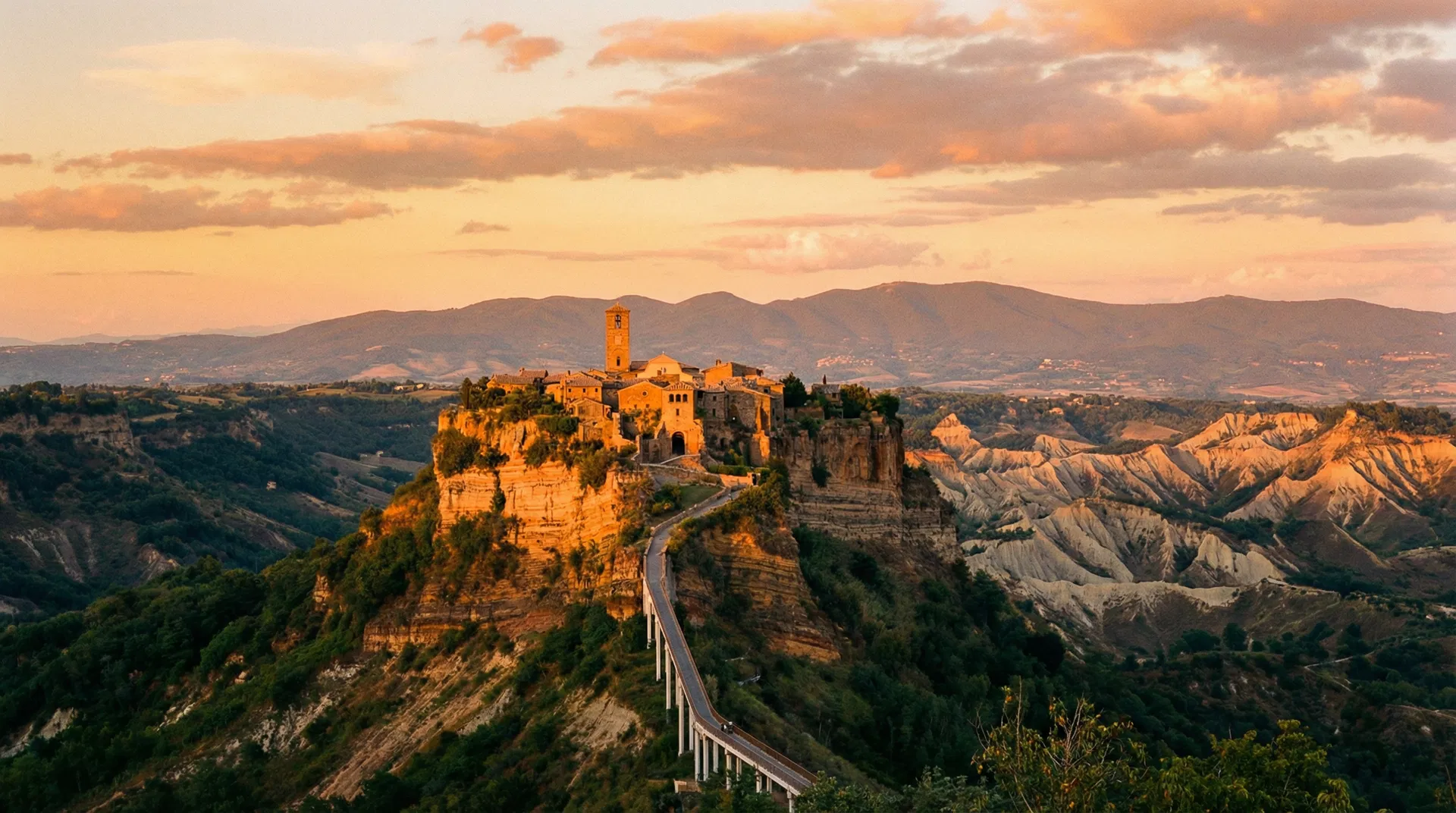
The History of Civita
2,500 years of history suspended between sky and earth
Etruscan Foundation
Civita is founded as an Etruscan settlement in a strategic position between the Tiber and Lake Bolsena. The city has 5 access gates, urban structure with cardi and decumani, necropolises and chamber tombs carved in tufa.
First Seismic Shocks
The first documented seismic shocks hit the area. The Etruscans build water containment works to protect the tufa spur.
Arrival of the Romans
The Romans conquer Civita and resume the Etruscan channeling works, consolidating the hydraulic infrastructure that protects the village.
Fall of the Empire
Passages of Visigoths, Goths, Byzantines, Lombards. The name "Balneum Regis" (Bagnorea) appears in the Lombard era — King Desiderius was reportedly healed by local thermal waters.
Free Commune
Civita becomes a Free Commune after the revolt against the Monaldeschi. A period of autonomy and flourishing begins. Franciscan preaching brings new spiritual life.
Saint Bonaventure is Born
Giovanni Fidanza is born, the future Saint Bonaventure. According to tradition, Saint Francis miraculously heals him as a child in the cave that now bears his name. He will become a Doctor of the Church.
Expulsion of the Monaldeschi
Final expulsion of the Monaldeschi tyrants of Orvieto. The lions with human heads at Porta Santa Maria commemorate this victory of the people.
Porta Albana
Construction of Porta Albana, the only access from Bagnoregio to Civita before the modern bridge.
The Great Earthquake
The catastrophe that definitively separates Civita from Bagnoregio. Collapse of connecting roads. Beginning of depopulation. The episcopal seat is transferred. It marks the beginning of the village's slow agony.
San Donato loses its title
The church of San Donato loses its cathedral title. Another sign of Civita's relentless decline after the earthquake.
From Bagnorea to Bagnoregio
"Bagnorea" officially becomes "Bagnoregio." A name change that marks the passage to modernity.
"The Dying City"
Bonaventura Tecchi publishes "Antica Terra" and christens Civita "the dying city," an expression that will become its most famous and controversial epithet.
The Modern Bridge
Construction of the 300-meter reinforced concrete bridge, the only modern access to Civita. An umbilical cord of stone and iron that ties the village to the world.
Miyazaki's Laputa
Hayao Miyazaki releases "Laputa — Castle in the Sky," inspired in part by Civita. The film will create an unbreakable bond between the village and Japanese culture.
Miyazaki visits Civita
Documented visit of Hayao Miyazaki to Civita di Bagnoregio. The master confirms the bond between the village and his work.
Entrance Ticket
Introduction of paid entrance tickets for the conservation of the village. A controversial but necessary choice to fund the consolidation of the tufa spur.
The Tourism Boom
From 40,000 to over 1 million visitors per year. Civita becomes a global tourism phenomenon, with 20% of visitors coming from Japan and East Asia.
UNESCO Candidacy
Official resolution for UNESCO candidacy as "Cultural Landscape of Civita di Bagnoregio." Not just the village, but the entire area of 5 municipalities is proposed as a World Heritage Site.
The City that Defies Time
About 10 permanent residents. Over 1 million annual visitors. A UNESCO candidacy in progress. Civita does not die: it defies time, every day.